.webp?width=91&height=70&name=MCDLG%20Logo%20(Resize).webp)
Preparing for hurricane season? Protect your ventilation points with hurricane-ready louvers. Learn what to look for when selecting hurricane louvers on the Newsstand.
According to the Atlantic Oceanographic and Meteorological Laboratory, hurricane season starts on May 15th for the East Pacific and June 1st for the Atlantic. The season ends for both regions on November 30th, as the oceans cool. Many focus on the Atlantic hurricane season because most hurricane activity in the United States occurs in the Atlantic.
Hurricane Awareness Week runs May 25th through May 31st in the United States, to help people stay prepared for the upcoming season. The Hurricane page on Ready.gov provides several ways you can prepare yourself and your loved ones.
In hurricane-prone areas, buildings should also be prepared for the season. That means following all local codes and standards for hurricane resistance, such as installing hurricane louvers in your ventilation points.
Preparation starts in the design phase.
When do you need hurricane protection?
If your project is in a coastal region, then you will need hurricane louvers for the ventilation openings in your building. Hurricane louvers are required for projects in the high velocity hurricane zone (HVHZ) in Florida, but other coastal regions will have similar requirements for hurricane protection.
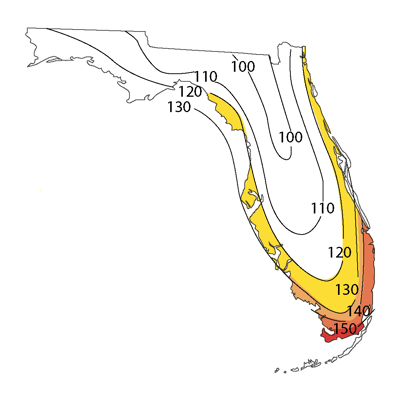
The need for hurricane protection is expected to increase as the climate changes. There may also be changes to the local codes and requirements in your area. If this happens, then you will need to replace certain louvers in your building with hurricane-rated louvers.
Hurricane Standards for Louvers
Two organizations dictate the standards for testing hurricane louvers, the Miami-Dade County Building Department and the Air Movement and Control Association (AMCA). Miami-Dade was originally the primary organization for testing hurricane louvers, but AMCA has established their own testing standards in recent years:
- AMCA 540 for windborne debris impact resistance
- AMCA 550 for high velocity wind driven rain
We discuss these standards at length in “AMCA 540 & 550”. This article also covers the similarities and differences between AMCA’s newer testing standards and Miami-Dade’s testing standards.
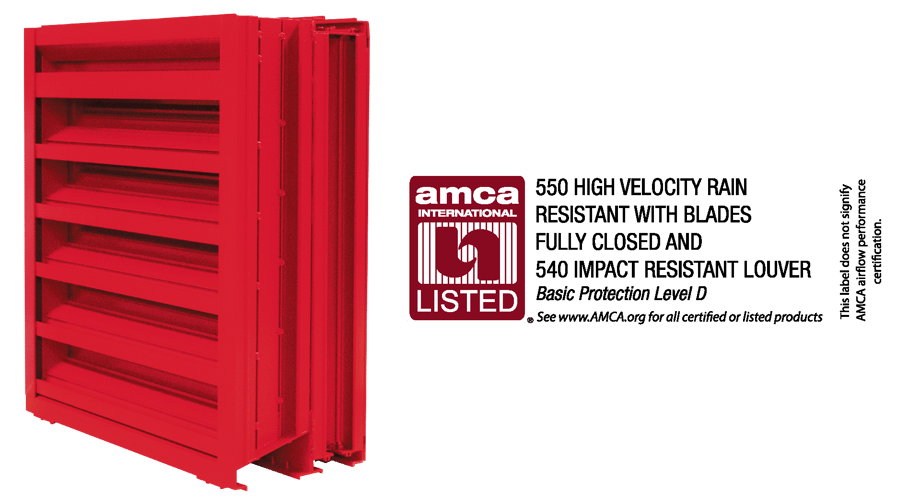
To summarize, AMCA’s standards share similarities with the Miami-Dade standard, but AMCA 540 and 550 were designed specifically for testing louvers. Many projects will call for louvers with listing labels for AMCA 540 and 550, though some projects may call for the Miami-Dade standard. Specification documents will call these standards out when specifying the individual louvers.
Check with your local building authorities for the most up-to-date standards and codes. Make sure your project meets the latest standards for hurricane protection.
What is a hurricane louver?
A hurricane louver is a louver designed to reject intense wind driven rain, resist impacts from windborne debris, or both. While the design is important, a hurricane louver must complete the tests required by AMCA or Miami-Dade. Testing ensures the louver meets the requirements for hurricane protection.
When a louver completes Miami-Dade’s testing standards, the Miami-Dade County Board of Regulatory and Economic Resources will issue a notice of acceptance (NOA) for that louver. The NOA includes a list of the tests conducted and other important details about the louver.
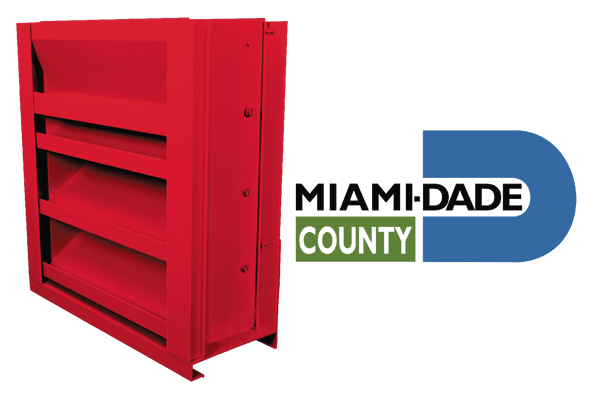
Manufacturers will provide the NOA number for their Miami-Dade approved louvers, so that you can look it up on Miami-Dade’s Product Control Search.
AMCA will apply a listing label to louvers that complete one or both of their hurricane louver tests. This label is different from the AMCA certified ratings seal. The AMCA listing label signifies that the louver completed the listed tests. Refer to our blog on AMCA 540 and 550 for a breakdown of these tests.
Hurricane louvers must have an AMCA Listing Label or a Miami-Dade NOA to meet hurricane protection requirements.
Where can I find hurricane louvers?
Manufacturers will often place hurricane louvers in their own separate category. Other manufacturers may put these louvers under “Severe Weather” or “Extreme Weather” to group them with similar louvers.
For example, at Arrow United Industries, we group our hurricane louvers into the “Severe Weather” category with our wind driven rain and FEMA-rated louvers. We also offer a way to search for products based on their certifications, so that you can quickly find louvers that meet your project’s requirements.
Prepare for Hurricane Season
If your project is in a coastal region, then you will likely have requirements for hurricane protection. It is vital that you meet these requirements with the right materials and components. Check your local codes and standards.
Make sure your louvers are ready for hurricane weather. Look for the Miami-Dade NOA or the AMCA listing label.
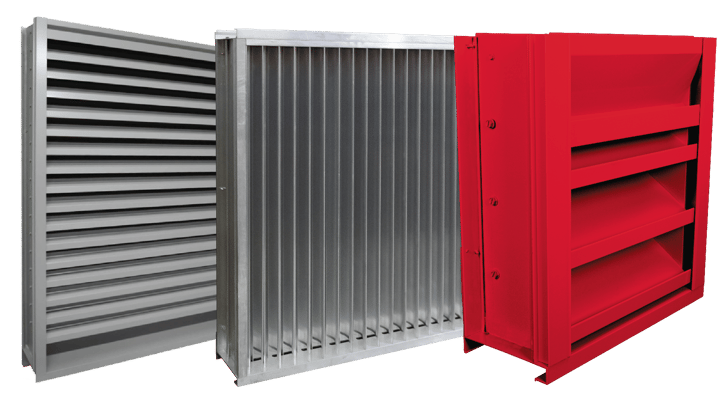
At Arrow United Industries, we build severe weather louvers for meeting tough requirements. From wind driven rain to hurricane protection, we can build the right louvers for your project.
Contact us today about our severe weather louvers. Let’s work together to finish your upcoming project.
For more on louvers, check out these Newsstand articles:
- Four Questions on Louver Location
- The Condenser - Three Key Traits of Wind Driven Rain Resistant Louvers
- Finding the Right Storm Louver