.png?width=600&height=158&name=MCDLG-logo2%20(50percent%20downscale).png "MCDLG Logo")
Check out our all-in-one guide on stable airflow for commercial HVAC. Learn how louvers and dampers work together to keep a steady flow or fresh air into your building.
Notice: This article was generated using Claude AI through HubSpot's AEO tools. The article was edited and fact-checked by Newsstand writers before publishing.
For human-made articles by HVAC experts, check out the MCDLG Newsstand.
Key Takeaways: The Complete Guide to Stable Airflow in Commercial HVAC
- Control dampers regulate airflow through ductwork, while louvers protect ventilation openings from weather and debris.
- Pressure drop occurs when air passes through louvers and dampers, requiring more fan power to maintain airflow rates.
- AMCA-certified testing verifies air performance, air leakage, and water penetration. They apply these ratings to tested products for reliable product selection.
- MCDLG builds custom louvers and dampers to support efficient and stable airflow.
- Proper sizing and installation of dampers and louvers prevents airflow imbalances, energy waste, and comfort issues.
What Is Stable Airflow and Why Does It Matter?
Stable airflow is the consistent movement of air through your HVAC system at the intended velocity and volume. These values are determined by engineers during the design phase of the system. When airflow remains stable, your system delivers conditioned air to every zone without hot spots, cold spots, or pressure imbalances. Stable airflow makes occupants comfortable, and improves indoor air quality, with minimal energy consumption.
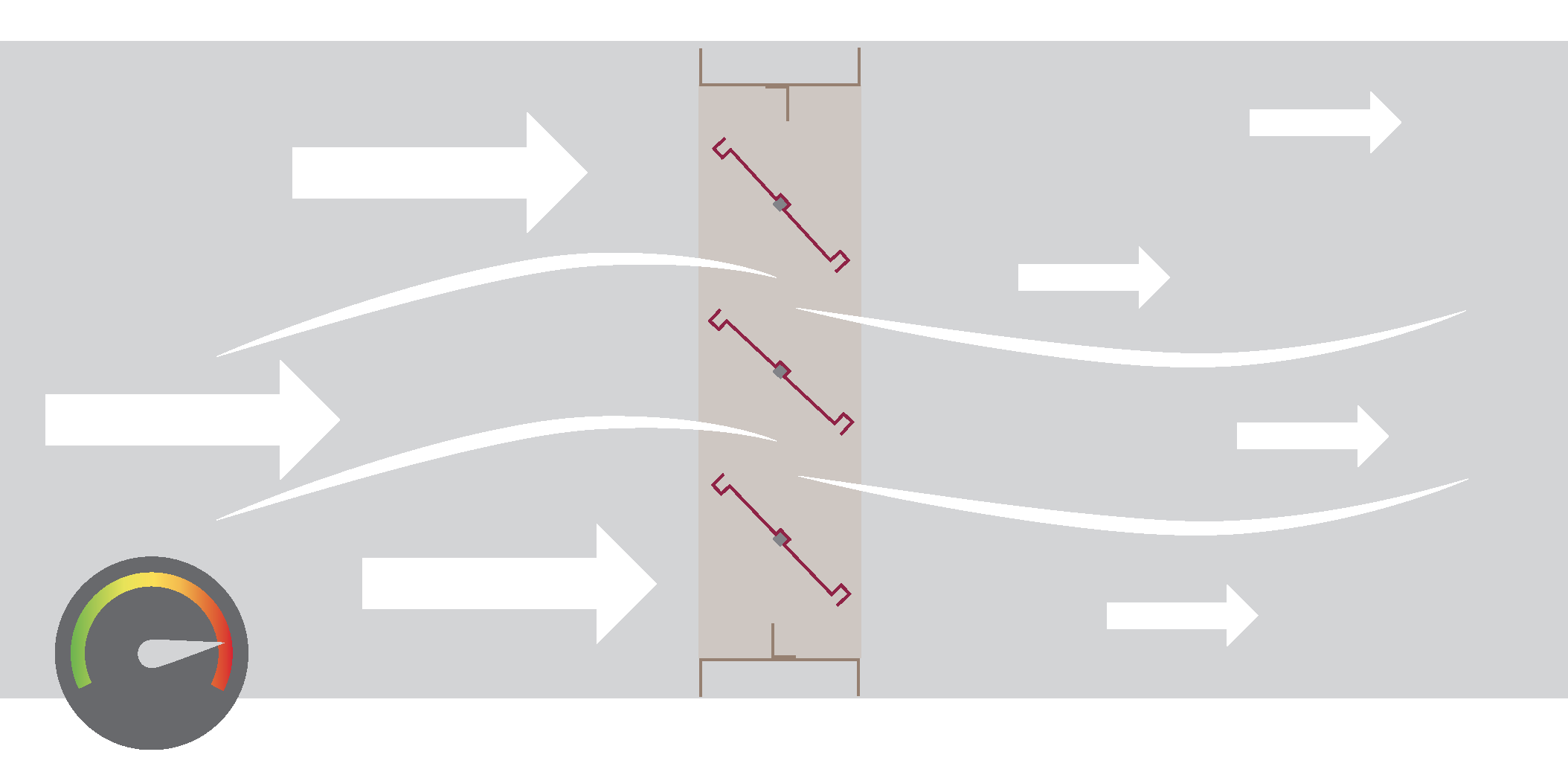
Commercial buildings face unique airflow challenges. Large interior spaces, multiple zones, and complex ductwork create opportunities for instability. A conference room might receive too much air while an adjacent office gets too little. These imbalances force HVAC equipment to work harder, increasing operating costs.
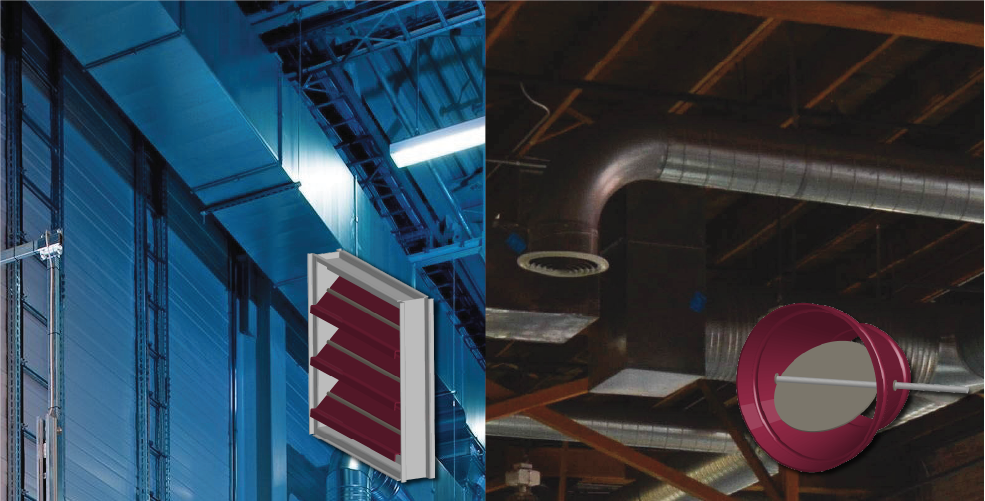
There are two important components that work together to maintain stable airflow: control dampers and louvers. Control dampers regulate airflow inside your ductwork. Louvers protect exterior ventilation openings while allowing air to pass through. Understanding how these components interact helps you design systems that deliver reliable performance.
How Do Control Dampers Regulate Airflow in Commercial Buildings?
Control dampers direct airflow through your HVAC system by opening and closing their blades. Think of them as valves for air. When a zone needs heating or cooling, the damper opens to allow conditioned air through. When the zone reaches the target temperature, the damper closes to redirect air elsewhere.
There are several types of dampers for different applications. Volume control dampers modulate airflow to specific zones. Fire and smoke dampers close during emergencies to prevent the spread of flames and toxic gases. Backdraft dampers allow air to flow in one direction only, preventing reverse flow through exhaust systems.
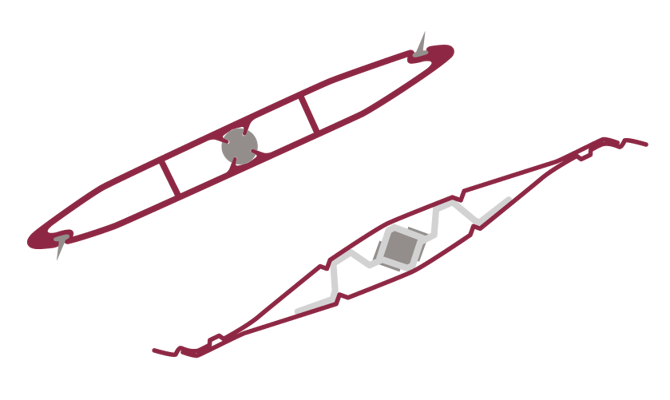
The blade design affects how efficiently air passes through an open damper. Airfoil blades have a smooth, curved profile that reduces resistance. Single-thickness blades are flat and simple. Both designs minimize features that would obstruct airflow, but airfoil blades typically deliver lower pressure drop.
Parallel Blade vs. Opposed Blade Action
Damper blades can rotate in two configurations. Parallel blade dampers have all blades rotating in the same direction. When open, the blades create channels that direct airflow in a consistent pattern. This design works well for on/off control and zone isolation.
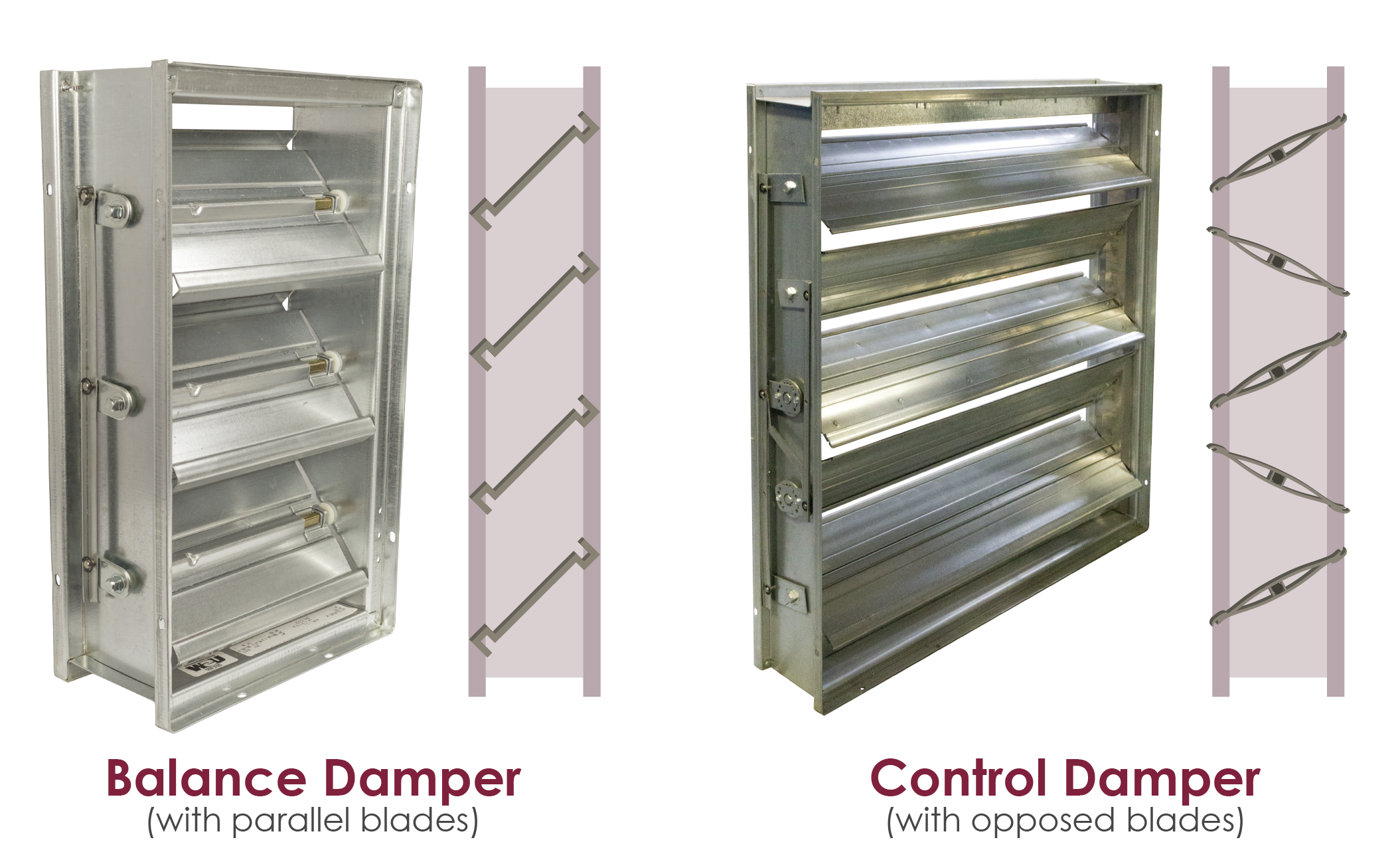 Opposed blade dampers have alternating blades rotating in opposite directions. This creates a mixing effect as air passes through. Engineers often specify opposed blade action for applications requiring precise airflow modulation or pressure equalization between ducts.
What Role Do Louvers Play in Commercial Ventilation Systems?
Louvers serve as the gateway between outdoor air and your building's HVAC system. They mount in exterior wall openings where fresh air enters or stale air exits. While their primary job is to protect these openings from rain, debris, and wildlife, their blade design significantly affects airflow efficiency.
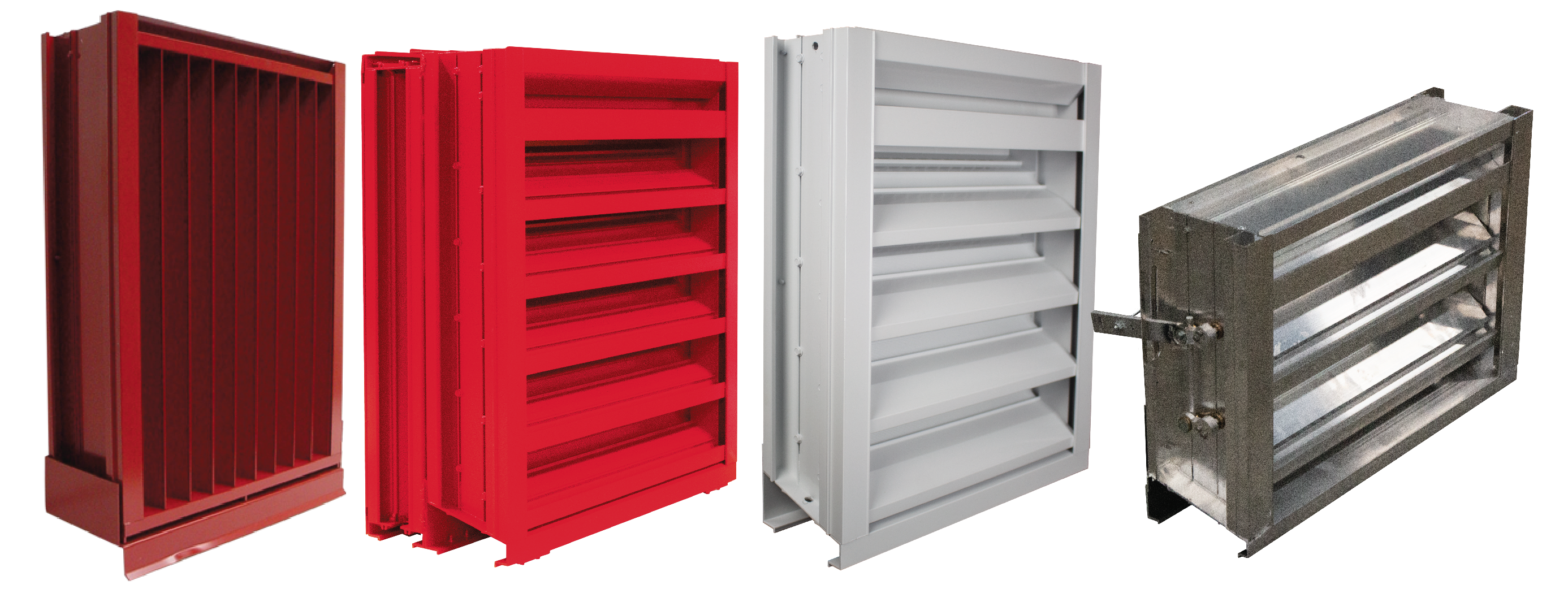
Unlike dampers, most louver blades have features designed to reject water. Drain channels, baffles, and angled profiles help prevent rainwater from entering your ductwork. These features add resistance to airflow, creating a tradeoff between weather protection and air performance.
Louver selection depends on the application. Intake louvers bring outdoor air into the building and must balance airflow capacity with water penetration resistance. Exhaust louvers release air from the building and typically face lower weather protection requirements but must still handle varying wind conditions.
Blade Profiles and Their Impact on Airflow
Straight blades offer the simplest profile with minimal features. Air passes through with relatively low resistance, but rain protection is limited. These work best in covered locations or mild climates where water intrusion risk is low.
Baffle blades have one or more steps that capture water carried on the airstream, preventing it from infiltrating the louver. These blades are typically equipped with drain troughs for safely draining water out of the louver.
Chevron blades feature an upward curve that forces water droplets to stop at the face while allowing air to pass around the bend. This design delivers excellent rain rejection with minimal impact on air performance. Many severe weather and hurricane louvers use chevron profiles.
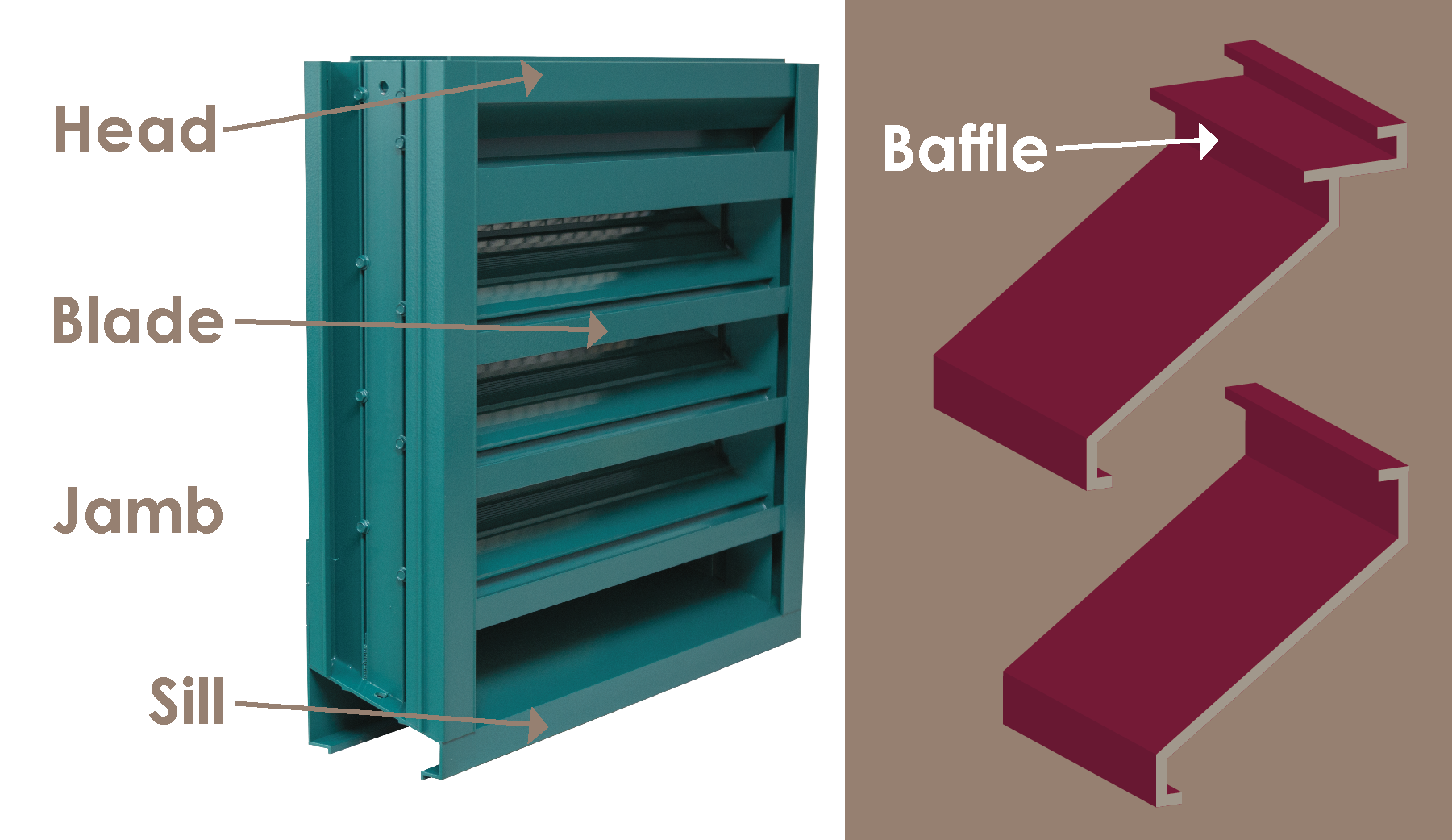
Drainable blades include gutters and channels that capture water and direct it away from the opening. The drain features add resistance but significantly improve water penetration resistance at higher air velocities.
How Does Pressure Drop Affect HVAC System Performance?
Pressure drop is the loss of air pressure as airflow passes through an obstruction. Every louver and damper in your system causes some pressure drop. This matters because your fans must work harder to overcome the resistance and maintain the required airflow rate.
Think of it like water flowing through a garden hose. If you add a nozzle to the hose, the flow decreases on the exiting side. You can increase the flow rate at the faucet to increase the flow rate. In HVAC systems, your fans play the same role as the faucet. Increasing fan speed increases the flow of air. Louvers and dampers create the squeeze points in your ductwork.
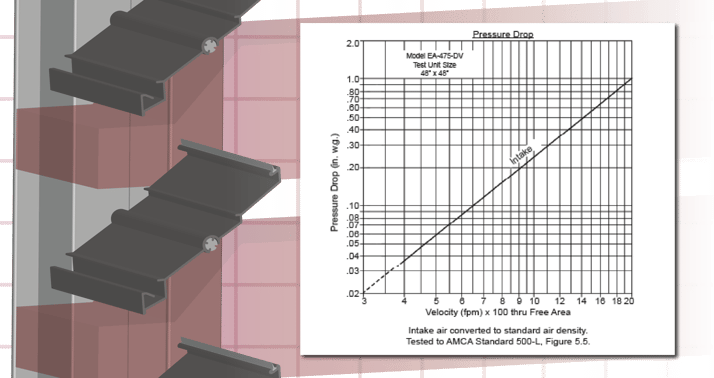
Higher pressure drop requires more fan energy, which increases operating costs. Poor duct transitions can amplify pressure drop and air leakage.
Static Pressure vs. Dynamic Pressure
Understanding the relationship between static and dynamic pressure helps you design balanced systems. Dynamic pressure is the force moving air through the duct. Static pressure is the resistance created by obstacles in the airstream.
For air to flow, dynamic pressure must exceed static pressure. When you add equipment to a duct, you add static pressure. Your fans must generate enough dynamic pressure to overcome this resistance. Minimizing unnecessary static pressure at each component allows your system to operate more efficiently.
What AMCA Standards Apply to Louvers and Dampers?
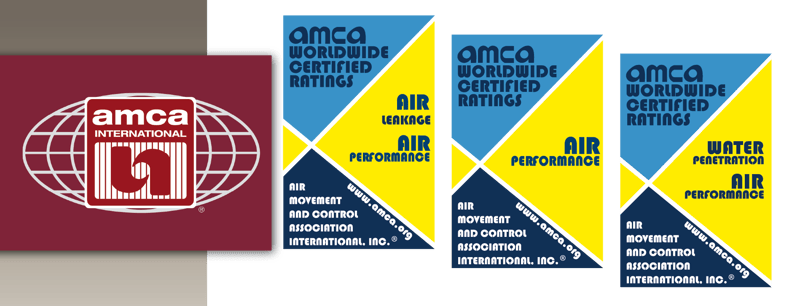
The Air Movement and Control Association (AMCA) establishes testing standards that verify product performance. When you see an AMCA Certified Ratings Program (CRP) seal on a product, it means the performance data was measured and verified according to AMCA protocols.
AMCA Standard 500-D covers testing methods for dampers, including air performance and air leakage. AMCA Standard 500-L covers louver testing for air performance, water penetration, and wind-driven rain resistance. These standards ensure you can trust the published performance data when specifying products.
Air performance testing measures pressure drop at various face velocities. The data appears on product submittals as line graphs showing the increase in pressure drop as airflow rate increases. Air leakage testing measures how much air passes through a closed damper at a given static pressure, expressed in CFM per square foot at a specified pressure differential. Lower leakage is better for stable airflow.
Why Third-Party Certification Matters
For AMCA certification, an independent laboratory tests the product under controlled conditions outlined in AMCA's standards and guidelines. The manufacturer cannot simply publish favorable numbers. This verification gives engineers confidence that installed products will perform as expected.
Products with AMCA CRP seals display their certified ratings. A single seal can represent multiple test ratings, such as air performance combined with water penetration. Always check that the specific rating you need appears on the seal for your intended application.
What Causes Airflow Instability in Commercial HVAC Systems?
Several factors contribute to unstable airflow. A wind-driven rain louver can protect against severe weather, but it can also create excess pressure drop at the intake point. Air leakage through closed dampers allows conditioned air to bypass its intended destination. This wastes energy and can create pressure imbalances between zones. Dampers with worn seals or damaged blades often develop leakage problems over time, making regular maintenance essential.
Building pressurization issues can also destabilize airflow. When exhaust exceeds intake, negative pressure develops. This pulls unconditioned air through cracks, doors, and other unintended paths. Positive pressurization prevents infiltration but requires careful balancing of intake and exhaust systems.
Common Installation Mistakes to Avoid
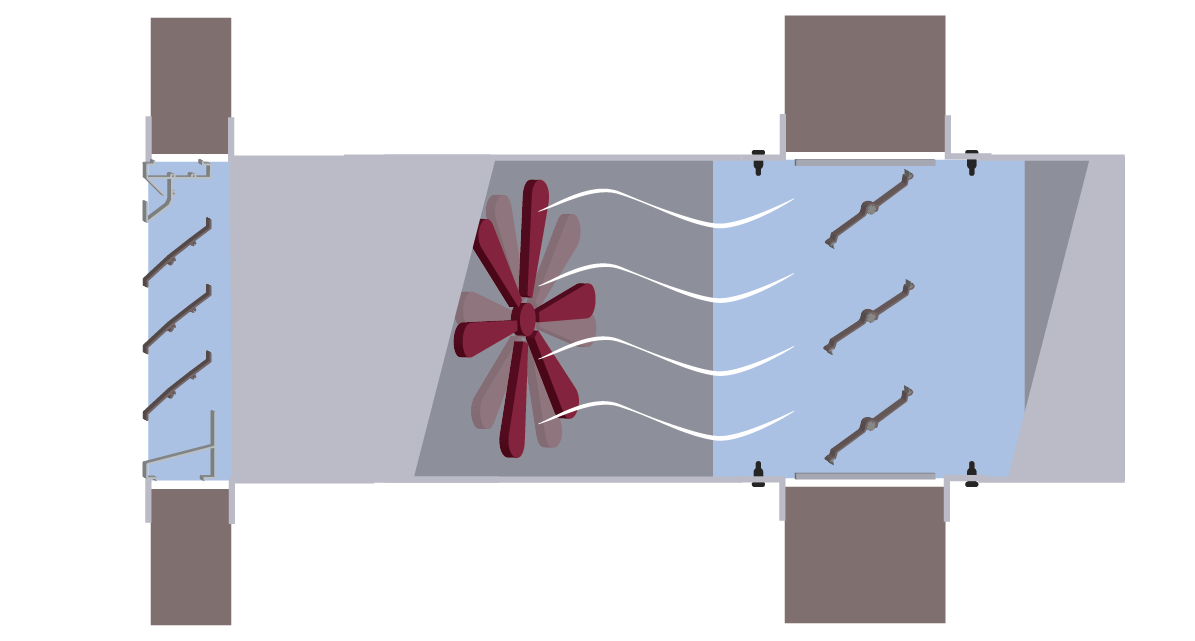
Placing dampers too close to duct transitions creates turbulence that affects blade operation. Allow adequate straight duct length of roughly two feet before and after dampers for proper airflow development. Consult the manufacturer's guidelines for recommended installation clearances.
Using galvanized dampers in outdoor air ducts invites corrosion problems. Humidity and salt can degrade galvanized coatings in under 10 years. For exterior applications, aluminum or stainless-steel construction delivers better long-term durability.
How Can You Minimize Pressure Drop in Your HVAC System?
Choose louvers and dampers with efficient blade designs. Airfoil blades on control dampers minimize resistance when open. Chevron blades on louvers balance weather protection with efficient airflow. Always review pressure drop data on product submittals before making final selections.
Size components appropriately for expected airflow rates. Oversized equipment does not necessarily mean lower pressure drop. Oversized dampers can create control problems that lead to system instability. Right-sizing delivers better performance than simply going bigger.
Design smooth duct transitions at louver and damper connections. Abrupt changes in duct size or direction increase turbulence and pressure loss. Gradual transitions help maintain laminar flow and reduce energy consumption.
The Value of AMCA-Certified Products
MCDLG products carry AMCA certification for air performance, air leakage, water penetration, and other relevant ratings. This certification verifies that the published data reflects actual tested performance. When you specify AMCA-certified products, you can trust that installed equipment will meet your design expectations.
MCDLG builds control dampers with airfoil blades that deliver low pressure drop while closing tightly to minimize leakage. The combination of efficient open-blade performance and tight closure supports stable airflow throughout your system.
What Role Do Actuators Play in Airflow Control?
Actuators drive the blade movement in control dampers. Electric actuators use motors to rotate blades, enabling automated control. Pneumatic actuators use compressed air. Manual actuators require physical adjustment. The choice depends on your control strategy and building automation requirements.
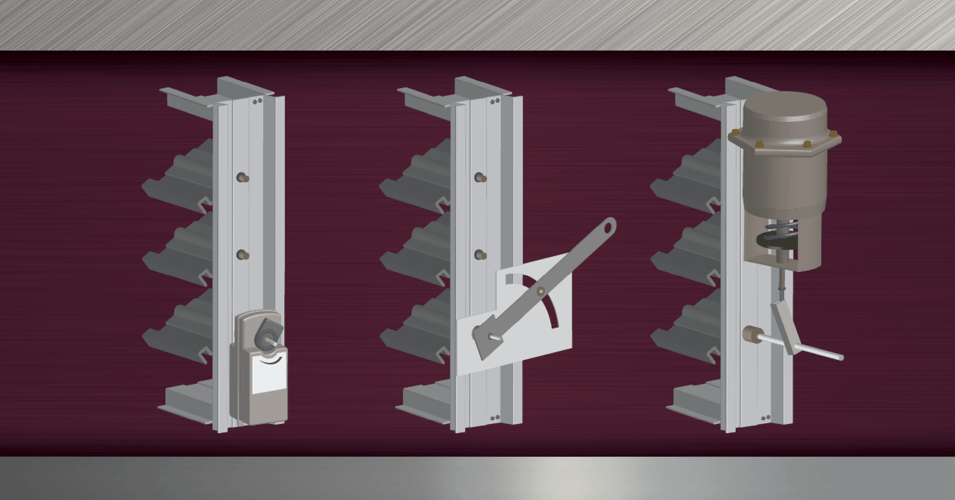
Electric actuators integrate with building management systems for automated zone control. When a thermostat calls for heating or cooling, the system signals the actuator to open or close the damper. This automation enables precise airflow control without manual intervention.
Actuator placement affects maintenance accessibility. Internal actuators mount inside the duct, while external actuators mount outside. External placement simplifies inspection and replacement but may require weatherproofing for outdoor air applications.
Matching Actuators to Damper Requirements
Actuators must generate enough torque to move damper blades against static pressure. Higher pressure differentials require more torque. Manufacturers publish torque requirements for their dampers at various pressure ratings.
Fail-safe actuators return blades to a predetermined position during power loss. Fire and smoke dampers typically require fail-safe actuators that close automatically. Outdoor air dampers may need fail-safe actuators that close to prevent uncontrolled infiltration during outages.
How Does Zone Control Improve HVAC Efficiency?
Zone control divides your building into separately controlled areas. Each zone has its own thermostat and dampers that regulate airflow based on local conditions. This allows your system to heat or cool occupied spaces while reducing output to unoccupied areas.
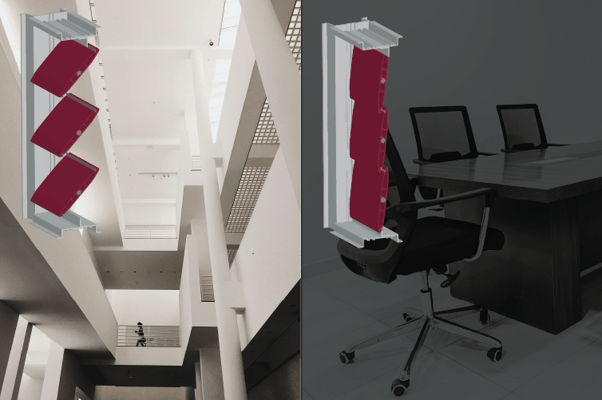
Consider a school building with multiple classrooms. Without zones, the HVAC system pushes air to every room regardless of occupancy. With zone control dampers, you can direct conditioned air only to occupied classrooms. Empty rooms receive minimal airflow until needed.
Zone control works best when dampers can open and close quickly in response to changing conditions. Modern systems tie their zone dampers to occupancy sensors and smart thermostats for real-time response, as part of the building's automation system. This combination maximizes comfort while minimizing energy waste.
Designing Effective Zone Dampers
Zone control dampers need several characteristics for effective operation. They must allow unrestricted airflow when the zone needs conditioning, and they must close tightly to prevent leakage that would affect other zones. And they must respond quickly to changing commands.
Blade and jamb seals minimize air leakage when dampers close. Airfoil blades with seals along both edges provide tight closure with efficient open-blade performance. Electric actuators enable the automation necessary for responsive zone control.
What Maintenance Do Louvers and Dampers Require?
Regular inspection helps catch problems before they affect system performance. Check damper blades for free movement and proper seal contact. Inspect louvers for debris accumulation, corrosion, and blade damage. Clean bird screens and filters that may become clogged over time.
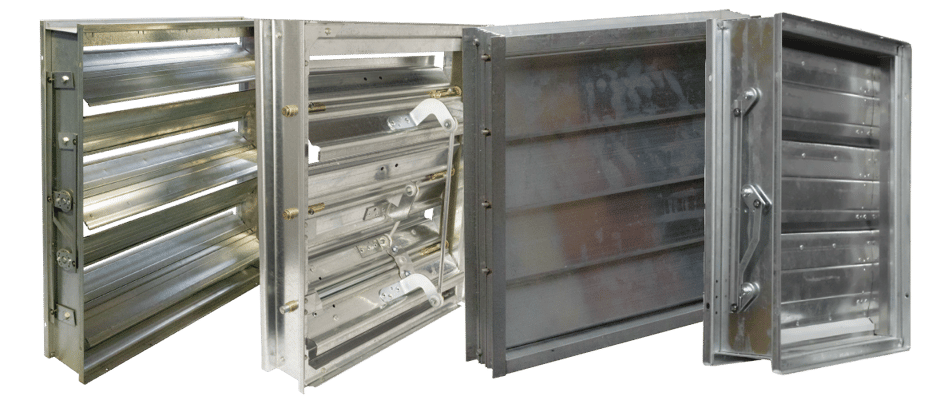
Fire and smoke dampers require periodic testing to verify proper operation, often annually. Actuators should close the damper completely and reset properly. Any damper that fails testing needs immediate repair or replacement.
Louvers exposed to harsh environments may need more frequent attention. Coastal locations with salt air accelerate corrosion. Industrial sites with airborne particles can clog blade passages. Establish maintenance schedules based on your specific environmental conditions.
Signs Your System Needs Attention
Uneven temperatures across zones often indicate air pressure problems. Areas that remain too hot or too cold despite thermostat adjustments may have a stuck or leaking damper, but these issues can also be pressure related. When paired with strange draughts and phantom doors that close on their own, the issue is with air pressure in the connected ductwork. Investigate promptly to prevent comfort complaints and energy waste.
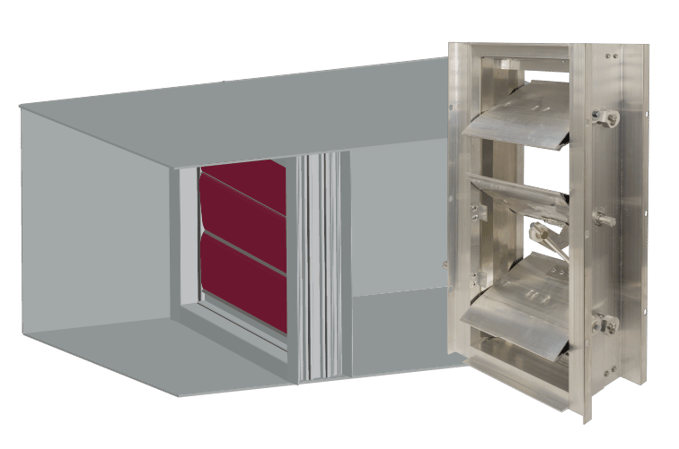
Unusual noise from ductwork can signal airflow problems. Whistling suggests high-velocity airflow through a partially closed damper or undersized opening. Rattling may indicate loose blades or damaged linkage. Address noise complaints to identify and correct underlying issues.
How Do Weather Conditions Affect Louver Selection?
Buildings in different climates face different challenges. Coastal locations deal with salt spray and high humidity that accelerate corrosion. Aluminum construction with appropriate coatings resists these conditions better than galvanized steel.
Regions with heavy rainfall need louvers with excellent water penetration resistance. Drainable blade designs and chevron profiles help reject water at the face. Wind-driven rain testing per AMCA standards verifies performance under realistic storm conditions.
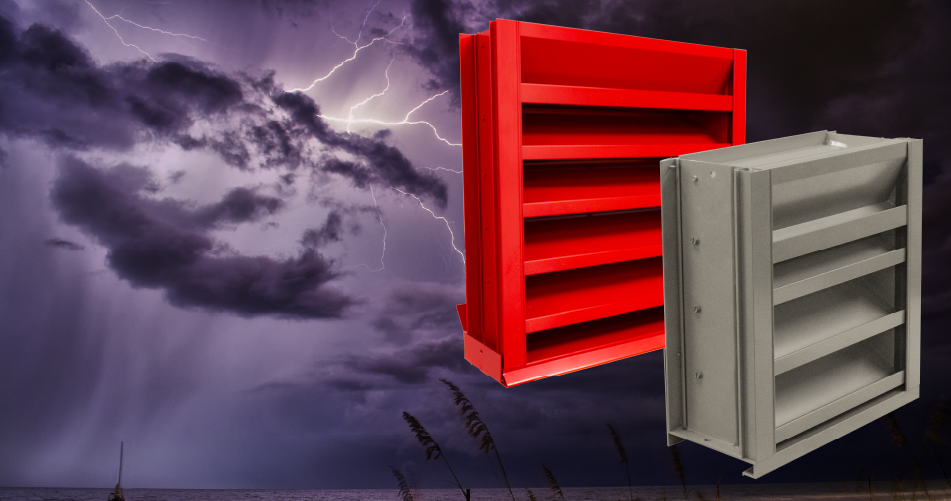
Hurricane-prone areas require specialized louvers tested to withstand high winds and windborne debris. Miami-Dade County approval indicates a product has passed rigorous testing for these conditions. FEMA P-361 and ICC 500 standards govern louver requirements for storm shelters and safe rooms.
Material Selection for Durability
Aluminum louvers offer corrosion resistance and lighter weight than steel alternatives. They accept a variety of finishes including anodized coatings and factory-applied powder paint. Most severe weather louvers use aluminum construction.
Stainless steel provides maximum corrosion resistance for demanding environments. It costs more than aluminum but may be necessary in coastal, industrial, or other harsh applications. Grade 304 suits most applications, while grade 316 handles the most aggressive environments.
How Do You Balance Air Performance with Weather Protection?
Every louver involves tradeoffs. Features that reject water also add resistance to airflow. The goal is finding products that meet your weather protection requirements with acceptable pressure drop. AMCA testing data helps you compare options objectively.
Start by identifying your requirements. What face velocity will you operate at? What level of water penetration resistance do you need? Are there wind-driven rain requirements based on local codes or building exposure? Define these parameters before comparing products.
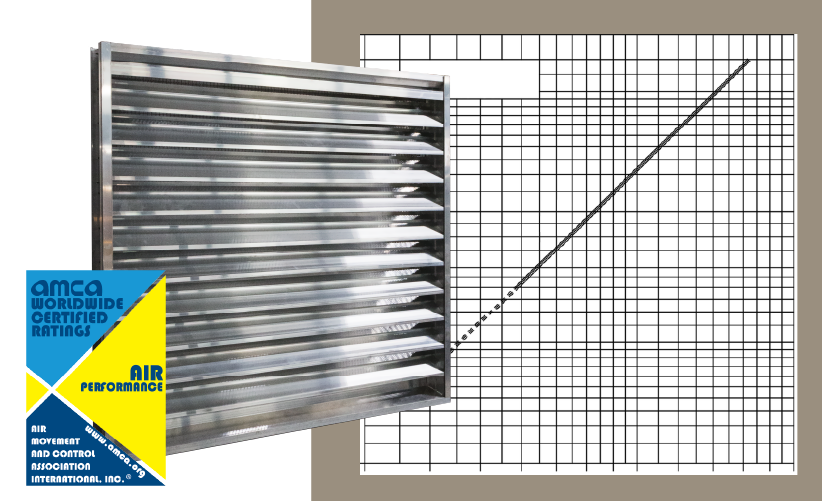
Use AMCA performance data to evaluate candidates. Check water penetration ratings at your operating velocity. Review pressure drop data to estimate fan energy impacts. Consider total cost of ownership including energy consumption over the building's life.
Working with Manufacturers for Optimal Solutions
Complex projects benefit from early engagement with manufacturers. MCDLG can help you navigate tradeoffs and select products that meet all requirements. Custom solutions may be available when standard products do not fit your specific application.
We offer continuing education courses through AEC Daily that cover louver and damper fundamentals. These courses help engineers and architects understand product selection criteria and specification best practices.
In Conclusion: Building Stable Airflow into Your Commercial HVAC Design
Stable airflow depends on the coordinated performance of control dampers and louvers throughout your system. Dampers regulate flow inside ductwork while louvers protect exterior openings. Both components affect pressure drop and must be sized appropriately for your airflow requirements.
AMCA certification ensures published performance data reflects actual tested results. Specifying AMCA-certified products from trusted manufacturers like MCDLG gives you confidence that installed equipment will perform as expected. This reliability supports the stable airflow your building occupants depend on.
Take time during design to evaluate pressure drop impacts and weather protection needs. Engage with manufacturers early when facing complex requirements. Establish maintenance programs to preserve performance over time. These practices help you deliver commercial HVAC systems that run efficiently year after year.
FAQs about Stable Airflow in Commercial HVAC
What is the difference between a louver and a damper?
Louvers mount in exterior wall openings to allow air in or out while protecting against rain, debris, and wildlife. Dampers install inside ductwork to regulate airflow by opening and closing their blades. MCDLG manufactures both products with designs optimized for their specific functions.
How do I know if my building has airflow problems?
Common signs include uneven temperatures across zones, unusual noise from ductwork, doors that are hard to open or close due to pressure differences, and complaints about stuffy or stale air. These symptoms suggest damper problems, undersized louvers, or system imbalances that warrant investigation.
What does AMCA certification mean for louvers and dampers?
AMCA certification verifies that product performance was tested according to standardized protocols in an accredited laboratory. MCDLG products carry AMCA CRP seals that confirm published air performance, air leakage, and water penetration data reflects actual measured results.
How often should fire and smoke dampers be tested?
Building codes typically require annual testing of fire and smoke dampers to verify proper operation. Testing confirms that actuators close dampers completely and that dampers reset properly afterward. Failed dampers must be repaired or replaced immediately to maintain life safety protection.
Why do some dampers have airfoil blades?
Airfoil blades have an aerodynamic curved profile that allows air to flow across with minimal resistance. This design reduces pressure drop when the damper is open, helping your system move air efficiently. MCDLG control dampers use airfoil blades to minimize energy consumption while maintaining tight closure.
Can louvers be used for both intake and exhaust?
Yes, louvers serve both functions, but selection criteria differ. Intake louvers must balance airflow with water penetration resistance since moisture entering the system damages ductwork and equipment. Exhaust louvers face lower water intrusion risk but must handle pressure from outgoing airflow.
What causes high pressure drop in HVAC systems?
Every component in the airstream adds resistance. Louvers, dampers, filters, coils, and duct fittings all contribute to total pressure drop. Undersized components, clogged filters, and poor duct transitions increase losses. MCDLG offers guidance on maximizing efficiency through proper product selection.
Thank you for reading! If you're interested in louvers and dampers, check out the MCDLG Newsstand for more articles.